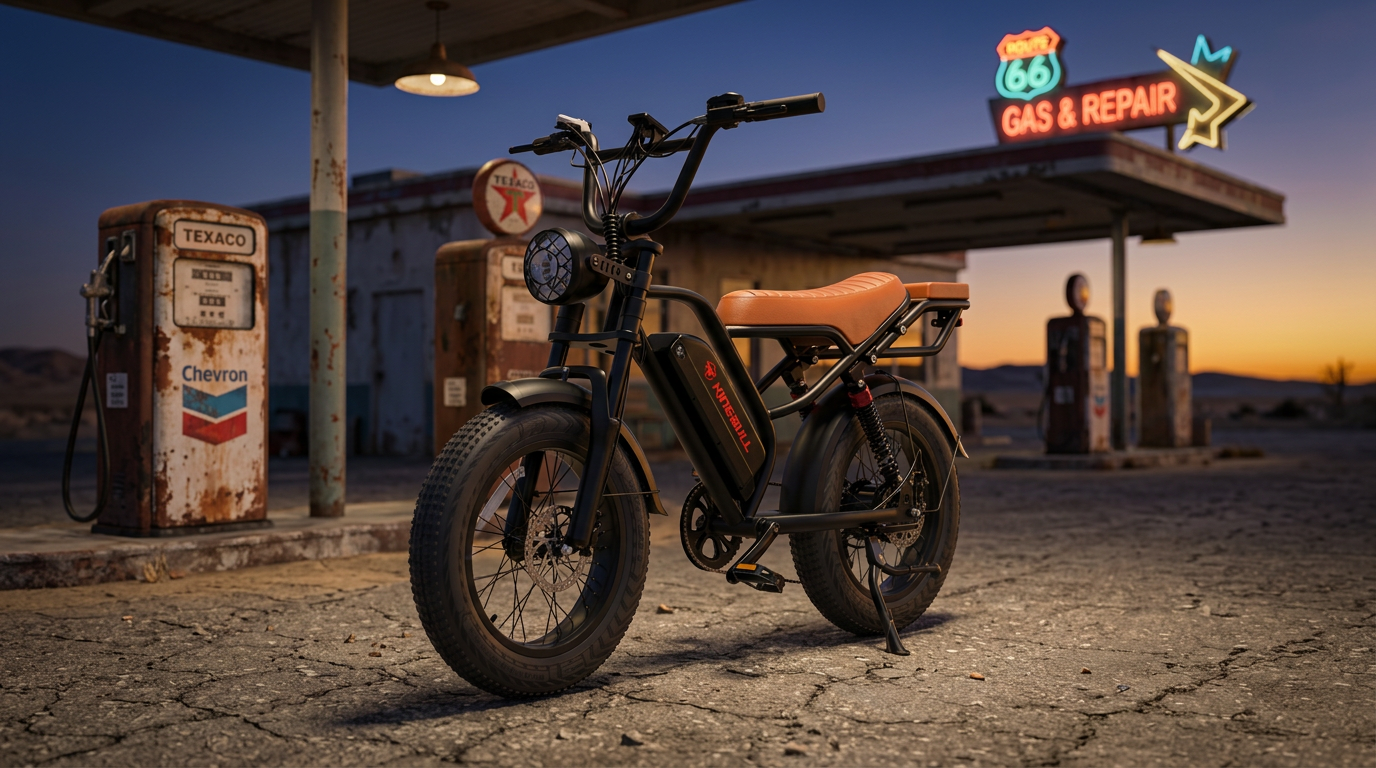
Kingbull Ranger Review: The Vintage Cruiser E-Bike — Specs, Range & Verdict
An 864Wh Samsung battery, a 750W hub motor, 28 MPH unlocked, and motorcycle-inspired styling that nothing else in the Kingbull lineup can match. Here's the honest take on who should buy it — and who should skip it.
Disclosure: This page contains affiliate links. We may earn a commission at no extra cost to you.
TL;DR
A lifestyle e-bike that doesn't sacrifice range
The Kingbull Ranger is the lineup's most distinctive bike. It pairs café-racer styling and a long sprung bench seat with one of the biggest batteries in the entire Kingbull range. It's heavy, it's not the most agile, and it isn't built for singletrack — but for cruising, two-up riding, and turning heads at the coffee shop, nothing else in this catalog comes close.
- Motor
- 750W hub
- Battery
- 864Wh
- Top speed
- 28 MPH
- Range
- Up to 80 mi
- Tires
- 20" × 4"
- Weight
- ~88 lbs
What we like — and what we don't
Pros
- Standout vintage café-racer styling — nothing else in the Kingbull lineup looks like it
- 864Wh Samsung battery is one of the largest in the entire range
- Long sprung bench seat is genuinely passenger-friendly
- Upright, relaxed riding posture for cruising
- 330 lb payload handles a rider plus a passenger or gear
- Hydraulic disc brakes standard, not an upsell
Cons
- Heaviest bike in the lineup at ~88 lbs — awkward to lift or rack
- 20" wheels + long wheelbase = slower handling than the Rover 2.0
- Style-first geometry isn't ideal for steep climbs or tight singletrack
- Premium price tier — you pay for the look
- No full suspension despite the cruiser styling
Design & build quality
The Ranger is the only Kingbull e-bike that genuinely looks like a vintage motorcycle. The frame uses a low, swept top tube paired with a long sprung bench seat — closer to a mini-bike or café-racer silhouette than a typical fat-tire commuter. The battery is tucked between the rider and the rear wheel where a fuel tank would sit on a motorcycle, which is what sells the look.
Build quality is on par with the rest of the lineup: 6061 aluminum frame, hydraulic disc brakes with 180mm rotors, integrated front and brake-activated rear lighting, and a color LCD with USB-out. Cabling is internally routed where it makes sense, and welds look clean in owner photos. The bike ships ~85% assembled with the front wheel, handlebar, pedals, and bench seat to install.
Motor, battery & real-world range
The Ranger runs a 750W rear hub motor with a 1,200W peak rating. On flat ground it pulls cleanly to 20 MPH on throttle alone and tops out at 28 MPH unlocked in Class 3 mode with pedal assist. It's not a torque-sensor bike — assist is cadence-based — so the feel is more on/off than the Rover 2.0's natural pedal response.
The 864Wh Samsung battery is the headline. That's one of the biggest packs in the Kingbull catalog, and it's what makes the 80-mile claim plausible at all. Realistically, expect 35–55 miles of mixed riding with throttle use, moderate hills, and a rider over 180 lbs. Stick to flat ground in eco mode and a strong rider can push past 60 — but no honest review should promise the catalog number.
Climbing is competent but not the Ranger's strong suit. The 20-inch wheels keep acceleration brisk, but the heavy frame and long wheelbase mean sustained steep climbs drain the battery faster than the Rover 2.0 or EX Titan would.
Ride quality & comfort
The Ranger is built to cruise. The upright riding position, long sprung bench seat, and 4-inch fat tires make this one of the most comfortable Kingbulls for long, relaxed rides on paved or hard-pack surfaces. The bench seat is genuinely passenger-friendly — with the optional foot pegs installed, two-up riding is comfortable up to about 30 minutes at a stretch.
The trade-off is agility. The long wheelbase makes tight U-turns awkward, and the ~88 lb curb weight is noticeable any time you have to lift, push, or rack the bike. There's a front suspension fork but no rear shock — washboard gravel and rough trail get filtered through the seat springs rather than a real suspension system.
Who the Kingbull Ranger is for
Buy it if you…
- • Want a head-turning vintage cruiser that nothing else in the lineup matches
- • Plan to ride two-up with a partner or kid on the bench seat
- • Care about real range — 864Wh is the biggest battery for the price
- • Ride mostly flat paved roads, boardwalks, and hard-pack trails
- • Want a relaxed, upright cruising posture, not a sporty crouch
Skip it if you…
- • Need a bike you can lift onto a car rack or carry upstairs
- • Ride steep climbs or tight singletrack regularly
- • Want the most versatile Kingbull — the Rover 2.0 is the better all-rounder
- • Need a folder for transit or small apartments
- • Are on a tight budget — the Ranger sits in the premium tier
Kingbull Ranger vs the rest of the lineup
vs Kingbull Rover 2.0: The Rover is our Editor's Choice and the more capable bike — full suspension, torque sensor, better climbing. Buy the Rover for versatility; buy the Ranger for styling.
vs Kingbull Voyager 2.0: The Voyager is the dedicated cargo hauler with a longer rear deck. Pick the Voyager if you actually haul gear or kids weekly; pick the Ranger if two-up cruising is the use case.
vs Kingbull Literider 2.0: The Literider is the budget folding bike — much lighter, much cheaper, far less battery. Different category entirely.
Verdict
The Kingbull Ranger is the lineup's lifestyle bike. You're not buying it because it's the most capable, the lightest, or the best climber — the Rover 2.0 wins those fights. You're buying it because it looks like nothing else on the bike path and it has the range and seat to back the styling up. For the right rider, that's exactly the point.
Kingbull Ranger full specs
| Motor | 750W rear hub (1,200W peak) |
|---|---|
| Battery | 48V / 18Ah · 864Wh Samsung cells |
| Claimed range | Up to 80 mi (pedal assist, eco) |
| Realistic range | 35–55 mi mixed riding |
| Top speed | 28 MPH (Class 3, unlocked) |
| Tires | 20" × 4" fat all-terrain |
| Brakes | Hydraulic disc, 180mm rotors |
| Drivetrain | Shimano 7-speed |
| Frame | 6061 aluminum, motorcycle-inspired |
| Suspension | Front fork, sprung bench seat |
| Weight | ~88 lbs (heaviest in lineup) |
| Payload | 330 lbs |
| Display | Color LCD with USB-out |
| Lighting | Integrated front + brake-activated rear |
Kingbull Ranger FAQ
+Is the Kingbull Ranger worth it?
If you want a head-turning vintage cruiser with real range and a passenger-friendly bench seat, yes. If you want the most capable or lightest Kingbull, no — the Rover 2.0 is more versatile and the Literider 2.0 is lighter.
+How fast does the Kingbull Ranger go?
28 MPH on throttle and pedal assist when unlocked to Class 3. Out of the box it ships as Class 2 (20 MPH) and can be unlocked in the settings menu where local law allows.
+What's the real-world range of the Kingbull Ranger?
Kingbull claims up to 80 miles in eco pedal assist. In our analysis of owner reports, expect 35–55 miles of mixed riding with throttle use, hills, and a rider over 180 lbs.
+Can two people ride the Kingbull Ranger?
Yes. The long sprung bench seat and 330 lb payload are specifically built for two-up riding, which is unusual at this price point. Add the optional foot pegs for passenger comfort.
+Kingbull Ranger vs Rover 2.0 — which should I buy?
Buy the Ranger if styling and passenger comfort matter most. Buy the Rover 2.0 if you want the most versatile, capable all-terrain Kingbull — it has full suspension, a torque sensor, and handles trails better.
+Is the Kingbull Ranger street legal?
Yes, in most US states. As shipped it's Class 2 (20 MPH throttle). Unlocking Class 3 (28 MPH) is legal in many states for road use but typically not on multi-use paths — check your local rules.